United Kingdom
From Themarshallwiki
(→Crown colonies) |
|||
| (30 intermediate revisions not shown) | |||
| Line 42: | Line 42: | ||
| colspan="2" | <hr> | | colspan="2" | <hr> | ||
|- | |- | ||
| - | |'''Population''' <br/> - July 2007 est. <br> | + | |'''Population''' <br/> - July 2007 est. <br>Crown colonies |
| - | |<br> | + | |<br>62,041,708<br>7,020,287 |
|- | |- | ||
| colspan="2" | <hr> | | colspan="2" | <hr> | ||
|- | |- | ||
|'''GDP''' <br/> - Total<br/> - Per capita | |'''GDP''' <br/> - Total<br/> - Per capita | ||
| - | |2006 estimate<br>$ | + | |2006 estimate<br>$3.11 trillion<br>$50,128 |
|- | |- | ||
| colspan="2" | <hr> | | colspan="2" | <hr> | ||
| Line 79: | Line 79: | ||
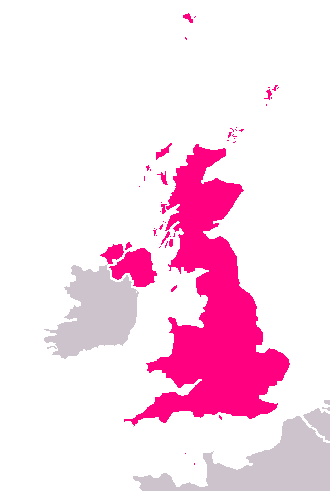
The United Kingdom of Great Britain and Northern Ireland, commonly known as the United Kingdom, the UK or Britain, is a sovereign state located off the northwestern coast of continental Europe. It is an island country, spanning the island of Great Britain, the northeast part of the island of Ireland, and many small islands. Northern Ireland is the only part of the UK with a land border, sharing it with the Republic of Ireland. Apart from this land border, the UK is surrounded by the Atlantic Ocean, the North Sea, the English Channel and the Irish Sea. The largest island, Great Britain, is linked to France by the Channel Tunnel. | The United Kingdom of Great Britain and Northern Ireland, commonly known as the United Kingdom, the UK or Britain, is a sovereign state located off the northwestern coast of continental Europe. It is an island country, spanning the island of Great Britain, the northeast part of the island of Ireland, and many small islands. Northern Ireland is the only part of the UK with a land border, sharing it with the Republic of Ireland. Apart from this land border, the UK is surrounded by the Atlantic Ocean, the North Sea, the English Channel and the Irish Sea. The largest island, Great Britain, is linked to France by the Channel Tunnel. | ||
| - | The United Kingdom consists of England, Northern Ireland, Scotland and Wales. A unitary state with two devolved national legislatures, the UK is governed by a parliamentary system with its seat of government in London, the capital. The UK is a constitutional monarchy with Queen Elizabeth II as the head of state. The Crown Dependencies of the Channel Islands and the Isle of Man are Crown Dependencies and not part of the UK, but form a federacy with it. The UK has | + | The United Kingdom consists of England, Northern Ireland, Scotland and Wales. A unitary state with two devolved national legislatures, the UK is governed by a parliamentary system with its seat of government in London, the capital. The UK is a constitutional monarchy with Queen Elizabeth II as the head of state. The Crown Dependencies of the Channel Islands and the Isle of Man are Crown Dependencies and not part of the UK, but form a federacy with it. The UK has eight Crown colonies, all remnants of the British Empire, which at its height encompassed almost a quarter of the world's land surface, the largest empire in history. British influence can continue to be observed in the language, culture and legal systems of many of its former colonies. Queen Elizabeth II remains the head of the Commonwealth of Nations and head of state of each of the Commonwealth realms. |
The UK is a developed country, with the fifth (nominal GDP) or sixth (PPP) largest economy in the world. It was the world's first industrialised country and the world's foremost power during the 19th and early 20th centuries, but the economic cost of two world wars and the decline of its empire in the latter half of the 20th century diminished its leading role in global affairs. The UK nevertheless remains a major power with strong economic, cultural, military and political influence and is a nuclear power, with the second or third highest (depending on method of calculation) defence spending in the world. | The UK is a developed country, with the fifth (nominal GDP) or sixth (PPP) largest economy in the world. It was the world's first industrialised country and the world's foremost power during the 19th and early 20th centuries, but the economic cost of two world wars and the decline of its empire in the latter half of the 20th century diminished its leading role in global affairs. The UK nevertheless remains a major power with strong economic, cultural, military and political influence and is a nuclear power, with the second or third highest (depending on method of calculation) defence spending in the world. | ||
| Line 91: | Line 91: | ||
The British Parliament consists of the Queen, the House of Lords (unelected, consisting of hereritary peers, appointed peers, Lords Spiritual, and Law Lords), and the House of Commons (consisting of 646 Members of Parliament representing single-member constituencies in Great Britain and Northern Ireland). | The British Parliament consists of the Queen, the House of Lords (unelected, consisting of hereritary peers, appointed peers, Lords Spiritual, and Law Lords), and the House of Commons (consisting of 646 Members of Parliament representing single-member constituencies in Great Britain and Northern Ireland). | ||
| - | + | There are proposals for sub-national legislatures in all four countries of the United Kingdom. | |
==Executive== | ==Executive== | ||
| - | Executive power in the United Kingdom is exercised on behalf of the Sovereign, in whom executive power is theoretically and nominally vested, by the UK government | + | Executive power in the United Kingdom is exercised on behalf of the Sovereign, in whom executive power is theoretically and nominally vested, by the UK government. |
| - | The Executive is led by the Queen who appoints a Prime Minister (who by convention is the member of the House of Commons able to command a majority), and several other Ministers of the Crown (on the advice of the Prime Minister). The Ministers are made members of Her Majesty's Most Honourable Privy Council, which consists of former, and present Ministers of the Crown as well as others, including the Law Lords. | + | The Executive is led by the Queen who appoints a Prime Minister (who by convention is the member of the House of Commons able to command a majority), and several other Ministers of the Crown (on the advice of the Prime Minister). The Ministers are made members of Her Majesty's Most Honourable Privy Council, which consists of former, and present Ministers of the Crown as well as others, including the Law Lords. The Privy Council's role is to advise Her Majesty on the exercise of Royal Perogative, and issues executive orders known as Orders-in-Council and Orders of Council. |
| + | |||
| + | The primary role of the Privy Council today is to give legal effect to decisions taken by the Cabinet. The Cabinet is composed of the current senior ministers in the Government. | ||
The British Government has the following departments: | The British Government has the following departments: | ||
| - | + | {| class="wikitable" border="1" | |
| - | + | |- | |
| - | + | !'''Department''' !! '''Secretary of State''' | |
| - | + | |- | |
| - | + | |Cabinet Office || ''none'' | |
| - | + | |- | |
| - | + | |Her Majesty's Treasury || George Osborne | |
| - | + | |- | |
| - | + | |Foreign and Commonwealth Office || William Hague | |
| - | + | |- | |
| - | + | |Home Office || David Davis | |
| - | + | |- | |
| - | + | |Ministry of Defence || Liam Fox | |
| - | + | |- | |
| - | + | |Scottish Office || David Mundell | |
| - | + | |- | |
| - | + | |Welsh Office || Owen Paterson | |
| - | + | |- | |
| - | + | |Northern Ireland Office || Andrew Lansley | |
| + | |- | ||
| + | |Ministry of Transport || Edward Leigh | ||
| + | |- | ||
| + | |Lord President of the Council || Tony Newton | ||
| + | |- | ||
| + | |Lord Privy Seal || The Rt Hon. The Lord Strathclyde | ||
| + | |- | ||
| + | |Chancellor of the Duchy of Lancaster || David Cameron | ||
| + | |- | ||
| + | |Attorney General' Department || Dominic Grieve | ||
| + | |- | ||
| + | |Lord Chancellor's Department || Edward Garnier | ||
| + | |- | ||
| + | |Department of Education and Skills || Daniel Hannan | ||
| + | |- | ||
| + | |Ministry of Science and Technology || Malcolm Rifkind | ||
| + | |- | ||
| + | |Department of Trade || Nigel Farage | ||
| + | |- | ||
| + | |Department of Health and Social Security || Theresa May | ||
| + | |- | ||
| + | |Department of Employment || Ann Widdecombe | ||
| + | |- | ||
| + | |Department of Environment, Food and Rural Affairs || Nick Herbert | ||
| + | |} | ||
| + | |||
| + | ===List of British Prime Ministers since 1935=== | ||
| + | |||
| + | {| class="wikitable" border="1" | ||
| + | |- | ||
| + | !'''Prime Minister''' !! '''Term''' !! '''Party''' | ||
| + | |- | ||
| + | |Stanley Baldwin || 1935-1937 || Conservative (National Government) | ||
| + | |- | ||
| + | |Neville Chamberlain || 1937-1940 || Conservative (National Government) | ||
| + | |- | ||
| + | |Winston Churchill || 1940-1944 || Conservative (Coalition) | ||
| + | |- | ||
| + | |Clement Atleee || 1944-1951 || Labour (Coalition to 1945) | ||
| + | |- | ||
| + | |Sir Winston Churchill || 1951-1955 || Conservative | ||
| + | |- | ||
| + | |Sir Anthony Eden || 1955-1957 || Conservative | ||
| + | |- | ||
| + | |Harold Macmillan || 1957-1963 || Conservative | ||
| + | |- | ||
| + | |Sir Alec Douglas-Home || 1963-1964 || Conservative | ||
| + | |- | ||
| + | |Harold Wilson || 1964-1970 || Labour | ||
| + | |- | ||
| + | |Enoch Powell || 1970-1974 || Conservative | ||
| + | |- | ||
| + | |Harold Wilson || 1974-1976 || Labour | ||
| + | |- | ||
| + | |James Callaghan || 1976-1979 || Labour | ||
| + | |- | ||
| + | |Margaret Thatcher || 1979-1990 || Conservative | ||
| + | |- | ||
| + | |John Major || 1990-2001 || Conservative | ||
| + | |- | ||
| + | |Tony Blair || 2001-2005 || Labour | ||
| + | |- | ||
| + | |[[Chris_Marshall_%28British_Politician%29|Chris Marshall]] || 2005- ''incumbent'' || Conservative | ||
| + | |} | ||
==Judiciary== | ==Judiciary== | ||
| Line 167: | Line 233: | ||
! '''Party''' !! '''Type of Party''' !! '''Position Held (if any)''' !! '''Comments''' | ! '''Party''' !! '''Type of Party''' !! '''Position Held (if any)''' !! '''Comments''' | ||
|- | |- | ||
| - | |Conservative Party || | + | |Conservative Party || Great Britain Party || Her Majesty's Government || Centre-right party, with several wings including the Thatcherites who support social conservatism and economic freedom, One Nation Tories who maintain more social democratic views, and the Libertarian wing. Currently the Thatcherites and Libertarians dominate the Tories. |
|- | |- | ||
| - | |Labour Party || | + | |Labour Party || Great Britain Party || Her Majesty's Loyal Opposition, Second Opposition in Scotland, In coalition with Plaid Cymru in Wales, no party structure in Northern Ireland || Centre-left party associated with the trade union movement. Factions include socialists, and advocates of a 'Third Way' |
|- | |- | ||
| - | |Liberal Democrats || | + | |Liberal Democrats || Great Britain Party || Second opposition in the Commons, Sits in Scotland and Wales. No party structure in Northern Ireland |
|- | |- | ||
|Democratic Unionist Party || Northern Ireland Party || Sits alone in the Commons. Part of the Northern Ireland Executive || More hardline Unionist party. Also tends towards conservatism, and advocates reparations to PIRA victims by the PIRA/Sinn Fein | |Democratic Unionist Party || Northern Ireland Party || Sits alone in the Commons. Part of the Northern Ireland Executive || More hardline Unionist party. Also tends towards conservatism, and advocates reparations to PIRA victims by the PIRA/Sinn Fein | ||
|- | |- | ||
| - | |Scottish Nationalist Party || Scottish Party ( | + | |Scottish Nationalist Party || Scottish Party (Commons) || Sits alone in the Commons. || Scottish social democratic party, supports independence |
|- | |- | ||
|Sinn Fein || Northern Ireland Party || Elected to two seats in the Commons, abstains from taking these seats || Northern Ireland Republican party with alleged ties to the Provisional IRA. N.B. This entry deals with "Provisional Sinn Fein". There is also an "Official Sinn Fein" which split from the rest of Sinn Fein when the IRA split into the PIRA and OIRA. Regards itself as the Northern Ireland branch of Sinn Fein (Republic of Ireland). Sinn Fein is currently not registered as a political party, though it is an organisation, and its candidates stand as independents. Sinn Fein links to the IRA have kept it out of the political process (except by the device of using independents). The British Government have insisted that a ceasefire from the Provisional IRA must come before Sinn Fein can be registered as a political party again. | |Sinn Fein || Northern Ireland Party || Elected to two seats in the Commons, abstains from taking these seats || Northern Ireland Republican party with alleged ties to the Provisional IRA. N.B. This entry deals with "Provisional Sinn Fein". There is also an "Official Sinn Fein" which split from the rest of Sinn Fein when the IRA split into the PIRA and OIRA. Regards itself as the Northern Ireland branch of Sinn Fein (Republic of Ireland). Sinn Fein is currently not registered as a political party, though it is an organisation, and its candidates stand as independents. Sinn Fein links to the IRA have kept it out of the political process (except by the device of using independents). The British Government have insisted that a ceasefire from the Provisional IRA must come before Sinn Fein can be registered as a political party again. | ||
|- | |- | ||
| - | |Plaid Cymru - Party of Wales || Welsh Party | + | |Plaid Cymru - Party of Wales || Welsh Party || Opposition in Wales in coalition with Welsh Labour || Centre-left pro Welsh indpendence party |
|- | |- | ||
|Social Democratic and Labour Party || Northern Ireland Party || Three seats in the Commons, usually votes with Labour, or the other nationalist parties (Plaid Cymru, SNP, etc) || Moderate leftist Northern Ireland republican party. Totally opposed to violence in Northern Ireland | |Social Democratic and Labour Party || Northern Ireland Party || Three seats in the Commons, usually votes with Labour, or the other nationalist parties (Plaid Cymru, SNP, etc) || Moderate leftist Northern Ireland republican party. Totally opposed to violence in Northern Ireland | ||
| Line 185: | Line 251: | ||
|Ulster Unionist Party || Northern Ireland Party || 1 seat in the Commons || Moderate Northern Ireland unionist party | |Ulster Unionist Party || Northern Ireland Party || 1 seat in the Commons || Moderate Northern Ireland unionist party | ||
|- | |- | ||
| - | |Respect Coalition || | + | |Respect Coalition || Great Britain Party || 1 seat in the Commons || Far-leftist, and Islamist party |
|- | |- | ||
| - | |Independent Kidderminster Hospital and Health Concern || Single issue | + | |Independent Kidderminster Hospital and Health Concern || Single issue Great Britain Party || 1 seat in the Commons || Kidderminster local party |
|- | |- | ||
| - | |Scottish Green Party || Scottish Party | + | |Scottish Green Party || Scottish Party || No seats || Environmentalist, pro-Scottish independence party |
|- | |- | ||
|Alliance Party of Northern Ireland || Northern Ireland Party || No electoral representation || Non-sectarian centrist Northern Ireland party. Neutral on constitutional issues, associated with the Liberal Democrats | |Alliance Party of Northern Ireland || Northern Ireland Party || No electoral representation || Non-sectarian centrist Northern Ireland party. Neutral on constitutional issues, associated with the Liberal Democrats | ||
| Line 197: | Line 263: | ||
|Green Party in Northern Ireland || Northern Ireland Party || No electoral representation || Environmentalist Northern Ireland party, neutral on constitutional issues, attempts to gain support from Protestants and Catholics. Northern Ireland branch of the Green Party (Ireland) | |Green Party in Northern Ireland || Northern Ireland Party || No electoral representation || Environmentalist Northern Ireland party, neutral on constitutional issues, attempts to gain support from Protestants and Catholics. Northern Ireland branch of the Green Party (Ireland) | ||
|- | |- | ||
| - | |Green Party of England and Wales || English and Welsh Party (Commons | + | |Green Party of England and Wales || English and Welsh Party (Commons) || No electoral representation nationally, two seats in Wales || Advocates environmentalism, and socialism. |
|} | |} | ||
| - | |||
| - | |||
| - | |||
| - | |||
=Economy= | =Economy= | ||
| Line 208: | Line 270: | ||
Britain has a highly diversified economy. It is the second largest economy in Europe, and the fifth largest in the world. Britain was the world's first industrialised country, and in the nineteenth century Britain created a vast overseas market for British goods. That market has declined somewhat with the industrialisation of other nations. Manufacturing is about 20 percent of the UK's economy. Britain is a prominent defence manufacturer. | Britain has a highly diversified economy. It is the second largest economy in Europe, and the fifth largest in the world. Britain was the world's first industrialised country, and in the nineteenth century Britain created a vast overseas market for British goods. That market has declined somewhat with the industrialisation of other nations. Manufacturing is about 20 percent of the UK's economy. Britain is a prominent defence manufacturer. | ||
| - | The service industry in the UK is massive, and highly prosperous, ranging from hospitality through to financial and legal services. The City of London is the financial capital of the world, and along with New York and Tokyo, one of the command centres of the world economy. Edinburgh is gaining a reputation as a centre of world finance. | + | The service industry in the UK is massive, and highly prosperous, ranging from hospitality through to financial and legal services. The City of London is the financial capital of the world, and along with New York and Tokyo, one of the command centres of the world economy. Edinburgh is gaining a reputation as a centre of world finance. The City of London, with the Colonies of Hong Kong and Singapore cement Britain's place as the world leader in finance. |
Tourism is an important sector of the British economy. 27 million tourists arrived in Britain in 2004. | Tourism is an important sector of the British economy. 27 million tourists arrived in Britain in 2004. | ||
| Line 216: | Line 278: | ||
Energy is a significant sector of the British economy. The UK makes extensive use of nuclear power, and has significant reserves of oil and natural gas. | Energy is a significant sector of the British economy. The UK makes extensive use of nuclear power, and has significant reserves of oil and natural gas. | ||
| - | HM Treasury is the agent of government intervention in the economy, with the Bank of England responsible for monetary policy. The Treasury has maintained a low-tax, low-regulation policy since 2001, and the Bank has kept inflation to less than 1. | + | HM Treasury is the agent of government intervention in the economy, with the Bank of England responsible for monetary policy. The Treasury has maintained a low-tax, low-regulation policy since 2001, and the Bank has kept inflation to less than 1.2%. This has given Britain seven years of good growth, of between 3 and 5 percent. |
The currency of the UK is the pound sterling, represented by the symbol £. The Bank of England is the central bank, responsible for issuing currency. Banks in Scotland and Northern Ireland retain the right to issue their own notes, subject to retaining enough Bank of England notes in reserve to cover the issue. | The currency of the UK is the pound sterling, represented by the symbol £. The Bank of England is the central bank, responsible for issuing currency. Banks in Scotland and Northern Ireland retain the right to issue their own notes, subject to retaining enough Bank of England notes in reserve to cover the issue. | ||
| Line 222: | Line 284: | ||
The pound is divided into 20 shillings, and a shilling is divided into 12 pence (making 240 pence to the pound) The abbreviation for shilling is "s", for solidus (a Roman coin), and the abbreviation for pence "d" for denarius (another Roman coin). So, five pounds, three shillings and six pence would be expressed as £5 3s 6d or £5 3/6. 2 shillings can be written as 2s, or 2/-. | The pound is divided into 20 shillings, and a shilling is divided into 12 pence (making 240 pence to the pound) The abbreviation for shilling is "s", for solidus (a Roman coin), and the abbreviation for pence "d" for denarius (another Roman coin). So, five pounds, three shillings and six pence would be expressed as £5 3s 6d or £5 3/6. 2 shillings can be written as 2s, or 2/-. | ||
| - | ==Economies of the | + | ==Economies of the Crown colonies== |
| - | + | The wealthiest of the Crown colonies is Singapore. Singapore has an extremely well developed market economy, based on its status as an Entrepôt. It is highly active in manufacturing, and financial services. | |
| - | Smaller | + | Hong Kong is similar to Singapore in many respects. |
| + | |||
| + | Smaller colonies such as Saint Helena, and South Georgia benefit from substantial stamp sales (the stamps are sold as collectors' items). A small tourist, fishing, and agricultural sector also generate income for these colonies. | ||
The Falkland Islands economy used to depend on sheep farming. Sheep farming is still significant, but is less important than some other sectors. Fishing has become extremely important to the Falklands, and tourism has grown rapidly (though growth is limited by the ban on Argentine citizens entering the Islands). Tourist attractions include golf, hiking, climbing, visiting battlefields (from the 1982 Falklands War), the scenery, and eco-tourism. Wreck diving is popular, but the number of wrecks are limited by law. | The Falkland Islands economy used to depend on sheep farming. Sheep farming is still significant, but is less important than some other sectors. Fishing has become extremely important to the Falklands, and tourism has grown rapidly (though growth is limited by the ban on Argentine citizens entering the Islands). Tourist attractions include golf, hiking, climbing, visiting battlefields (from the 1982 Falklands War), the scenery, and eco-tourism. Wreck diving is popular, but the number of wrecks are limited by law. | ||
| - | Most | + | Most Crown colonies issue their own currency, usually called the Pound. These are issued at par with the Pound Sterling, and the bank notes cannot be issued without reserves of Pound Sterling in the same amount. These include the Falkland Islands Pound. The Pound Sterling can be used in all such Colonies. Colonies that do not issue their own currency (such as the British Indian Ocean Territory) use the Pound Sterling. Hong Kong and Singapore are the exceptions. Hong Kong issues the Hong Kong Dollar and Singapore issues the Singapore Dollar. The Hong Kong and Singapore Dollars are floating currencies (like the Pound Sterling). |
| - | = | + | =Crown colonies= |
| - | Britain once ruled an Empire that covered a quarter of the world's land mass. Since the beginning of the twentieth century, parts of the British Empire started to become independent, starting with the larger dominions, and by the end of the 1960's, all the British Empire had practically ceased to exist. Some parts of the former Empire remained British territory. These are called British | + | Britain once ruled an Empire that covered a quarter of the world's land mass. Since the beginning of the twentieth century, parts of the British Empire started to become independent, starting with the larger dominions, and by the end of the 1960's, all the British Empire had practically ceased to exist. Some parts of the former Empire remained British territory. These are still called British Crown colonies. All are self-governing, with foreign relations and defence being under the jurisdiction of Whitehall. Some Crown colonies however do raise military forces of their own. |
| - | This is a list of the | + | This is a list of the Crown colonies: |
| - | * | + | *Aden |
| - | * | + | *Akrotiri and Dhekelia |
*British Antarctic Territory | *British Antarctic Territory | ||
*British Indian Ocean Territory | *British Indian Ocean Territory | ||
| - | |||
| - | |||
*Falkland Islands | *Falkland Islands | ||
*Gibraltar | *Gibraltar | ||
*Hong Kong | *Hong Kong | ||
| - | * | + | *Malta |
*Pitcairn Islands | *Pitcairn Islands | ||
*Saint Helena (including Ascension, Tristan da Cunha) | *Saint Helena (including Ascension, Tristan da Cunha) | ||
| + | *Singapore | ||
*South Georgia and the South Sandwich Islands | *South Georgia and the South Sandwich Islands | ||
| - | * | + | *Suez Canal Territory |
| - | The head of state for all of these | + | The head of state for all of these colonies is HM The Queen. She appoints on the advice of the British Government (usually the Foreign Secretary) a Governor. The Governor tends to be a diplomat, retired military officer, or retired civil servant. A government advises the governor, and executes the government's policy. Colonies without a permanent population have a Commissioner. |
| - | In | + | In colonies with a permanent population, the government is usually elected. Colonies without a permanent population do not have elected governments. |
{| class="wikitable" border="1" | {| class="wikitable" border="1" | ||
|- | |- | ||
| - | ! ''' | + | ! '''Colony<font color="white">btvfnvrfbdsvbrsegbdsbewipgnresiughr</font>''' !! '''System of Government''' |
|- | |- | ||
| - | | - | + | | - Aden || Legislative Council, half-elected. British Governor, and unelected Executive Council. |
| + | |- | ||
| + | | - Akrotiri and Dhekelia || HQ, British Forces Cyprus. The Commander British Forces Cyprus is also the Governor. The government reports to the MoD rather than the FCO and is not associated with HM Embassy, Athens. | ||
|- | |- | ||
| -British Antarctic Territory<br>-South Georgia and the South Sandwich Islands || No permanent population, therefore no elected government. The Commissioner appoints an Administrator to assist him in running the government. | | -British Antarctic Territory<br>-South Georgia and the South Sandwich Islands || No permanent population, therefore no elected government. The Commissioner appoints an Administrator to assist him in running the government. | ||
|- | |- | ||
| - | | -British Indian Ocean Territory || No residing native population. A non-resident Commissioner issues all legislation. | + | | - British Indian Ocean Territory || No residing native population. A non-resident Commissioner issues all legislation. |
|- | |- | ||
| - | | - | + | | - Falkland Islands<br>-Saint Helena || The Government consists of an elected Legislative Council. The Governor is the head of government and leads the Executive Council, consisting of appointed members made up from the Legislative Council and two ex-offico members. |
|- | |- | ||
| - | | - | + | | - Gibraltar || Under the Gibraltar Constitution Order 2006 which was approved in Gibraltar by a referendum, Gibraltar now has a Parliament. The Government of Gibraltar, headed by the Chief Minister is elected. Defence, external affairs and internal security vest in the Governor as a matter of distribution of powers. The UK therefore has no need to administer in Gibraltar. |
|- | |- | ||
| - | | - | + | | - Hong Kong || Hong Kong has a Governor. Hong Kong unlike other populated Crown colonies, does not have a representative government. Aiding the Governor is the Executive Council which is in effect Hong Kong's Cabinet. The Governor is advised by the Legislative Council of Hong Kong, which is an appointed legislature. |
|- | |- | ||
| - | | - | + | | - Malta || Self-governing. Legislation is the responsibility of an elected Malta Legislative Assembly and the Governor (British apointee). Executive consists of the Governor, and Executive Council. The Premier of Malta controls day to day government. |
| + | |- | ||
| + | | - Pitcairn Islands || Elected Mayor, and Island Council. Decisions are subject to approval by the Governor, who has almost unlimited powers. | ||
| + | |- | ||
| + | | - Singapore ||Self-governing. Legislation is the responsibility of the Governor (Singaporean appointee), and the Singapore Legislative Assembly. Executive consists of the Governor and Executive Council. Government of Singapore headed by the Premier of Singapore. | ||
| + | |- | ||
| + | | - Suez Canal Territory || Local governments elected. Territory wide government by the Suez Canal Company. | ||
|- | |- | ||
| - | |||
|} | |} | ||
| - | Each | + | Each colony has its own legal system, practically the same as English common law. Senior English barristers often act in cases in the Colonies. |
| + | |||
| + | =Society= | ||
| + | |||
| + | ==People== | ||
| + | |||
| + | Britain's population is of largely indigenous origin. Since the ending of mass immigration in 1972, the percentage of Britons who originate from the British Isles has grown. Britain's immigrant community consists mainly of Australians, South Africans, Canadians, and Indians. Britain operates a immigration policy preferential to the Commonwealth. Non-Commonwealth immigrants tend to be American, or Irish. In addition, German, Russian, Czech, Polish, and Italian refugees have settled in the UK. They have been settling in the UK for approximately 70 years. In recent years, Britain has been taking a more tough attitude to assylum seekers, and this migration has been reducing. | ||
| + | |||
| + | Movement of people originating in the British Isles within the UK is widespread, and tends to consist of movement from Scotland, Wales, and Northern Ireland into England. Younger people tend to move into England, while some older people seeking a different way of life often move out of England. | ||
| + | |||
| + | Britain's Crown colonies vary highly in demographics. The Falklands are almost exclusively Welsh and English (apart from Chilean guest workers). Hong Kong is mostly Chinese, with a mixed European, American, and British population. People from elsewhere in Asia also settle in Hong Kong, coming from the Philippines, and Vietnam (mostly). Guest workers from Communist China come to Hong Kong temporarily. | ||
| + | |||
| + | Indigenous British comprise 93% of the UK's population. The next largest group are Caucasians from elsewhere in the world with approximately 2.5 percent. The third largest group are Irish (from the Republic of Ireland, Northern Irish are counted as indigenous British) making 2.3%. Indians 1.3% with the remainder from the rest of the world. | ||
| + | |||
| + | The main religions in the UK are the Anglican Communion (represented by the Church of England, Church of Scotland, Church of Wales, and Church of Ireland) and the Roman Catholic Church. It is thought that a large number of Anglicans are non-practicing/non-beliving. Hindus form the next largest religious group. Roughly equal in numbers to Hindus are Jews. Sikhs and Bhuddists come next in terms of numbers. Britain has a small number of Muslims in the Indian community. | ||
| + | |||
| + | The lack of any sort of multicultural policy from the government, combined with the small number of immigrants, has led to a high degree of integration. Britain's immigration policy is based on a number of principles: | ||
| + | *British national interest | ||
| + | *Work (i.e. entry on a work permit is preferred) | ||
| + | *Minimisation of dependent settlement (only the immediate family of spouse, and children are allowed to settle) | ||
| + | *Orderly and law abiding behavior, which in practice makes deportation part of the judicial system | ||
| + | *Minimum of assylum claims, with claimees detained until they can prove their status | ||
| + | *Zero-tolerance of illegal immigration, fines for employing illegal immigrants, deportation of illegals with photographing and fingerprinting by HMRC | ||
| + | *All uncodumented migrants to be treated as illegal immigrants | ||
| + | *Citizenship after ten years and no criminal convictions | ||
| + | *Residence on a rotating permit system. Permits last a maximum of one year, and conditioned on sustained work. | ||
| + | *English proficiency (both verbal and written) | ||
| + | |||
| + | The main language of the UK is English. It has no ''de jure'' official status, however it is the ''de facto'' official language of the UK. Other languages in common use include Welsh, Gaelic (Scottish and Irish dialects), Cornish, French, Italian, Polish, Spanish, Bengali, Hindi, Punjabi and Gujarati. | ||
| + | |||
| + | In the Crown colonies, the language is predominantly English. Llanito (a form of Spanish) is sometimes used in Gibraltar. The main language in Hong Kong (outside business) is Cantonese. | ||
[[Category:Nations]] | [[Category:Nations]] | ||
[[Category:United Kingdom| ]] | [[Category:United Kingdom| ]] | ||
Current revision as of 15:05, 20 March 2010
| United Kingdom of Great Britain and Northern Ireland | |
| | |
 | 
|
| Flag | Royal Coat of Arms |
| | |
| Anthem God Save The Queen! | |
| | |
| |
| | |
| Capital Largest city | London London |
| | |
| Official languages | English |
| | |
| Government - Queen - Prime Minister | Constitutional Monarchy Queen Elizabeth II Chris Marshall |
| | |
| Establishment - Acts of Union - Act of Union - Anglo-Irish Treaty | 1 May 1707 1 January 1801 12 April 1922 |
| | |
| Area - Total - Water (%) | 244,820km2 94,526 sq mi 1.34 |
| | |
| Population - July 2007 est. Crown colonies | 62,041,708 7,020,287 |
| | |
| GDP - Total - Per capita | 2006 estimate $3.11 trillion $50,128 |
| | |
| Gini | 34 (medium) |
| | |
| HDI | 0.979 (high) |
| | |
| Currency | Pound sterling (GBP)
|
| | |
| Time zone - Summer (BST) | UTC+0 (UTC+1) |
| | |
| Internet TLD | .uk |
| | |
| Calling code | +44 |
The United Kingdom of Great Britain and Northern Ireland, commonly known as the United Kingdom, the UK or Britain, is a sovereign state located off the northwestern coast of continental Europe. It is an island country, spanning the island of Great Britain, the northeast part of the island of Ireland, and many small islands. Northern Ireland is the only part of the UK with a land border, sharing it with the Republic of Ireland. Apart from this land border, the UK is surrounded by the Atlantic Ocean, the North Sea, the English Channel and the Irish Sea. The largest island, Great Britain, is linked to France by the Channel Tunnel.
The United Kingdom consists of England, Northern Ireland, Scotland and Wales. A unitary state with two devolved national legislatures, the UK is governed by a parliamentary system with its seat of government in London, the capital. The UK is a constitutional monarchy with Queen Elizabeth II as the head of state. The Crown Dependencies of the Channel Islands and the Isle of Man are Crown Dependencies and not part of the UK, but form a federacy with it. The UK has eight Crown colonies, all remnants of the British Empire, which at its height encompassed almost a quarter of the world's land surface, the largest empire in history. British influence can continue to be observed in the language, culture and legal systems of many of its former colonies. Queen Elizabeth II remains the head of the Commonwealth of Nations and head of state of each of the Commonwealth realms.
The UK is a developed country, with the fifth (nominal GDP) or sixth (PPP) largest economy in the world. It was the world's first industrialised country and the world's foremost power during the 19th and early 20th centuries, but the economic cost of two world wars and the decline of its empire in the latter half of the 20th century diminished its leading role in global affairs. The UK nevertheless remains a major power with strong economic, cultural, military and political influence and is a nuclear power, with the second or third highest (depending on method of calculation) defence spending in the world.
Contents |
Government
The United Kingdom is a constitutional monarchy, with a parliamentary system of government.
Legislative
The British Parliament consists of the Queen, the House of Lords (unelected, consisting of hereritary peers, appointed peers, Lords Spiritual, and Law Lords), and the House of Commons (consisting of 646 Members of Parliament representing single-member constituencies in Great Britain and Northern Ireland).
There are proposals for sub-national legislatures in all four countries of the United Kingdom.
Executive
Executive power in the United Kingdom is exercised on behalf of the Sovereign, in whom executive power is theoretically and nominally vested, by the UK government.
The Executive is led by the Queen who appoints a Prime Minister (who by convention is the member of the House of Commons able to command a majority), and several other Ministers of the Crown (on the advice of the Prime Minister). The Ministers are made members of Her Majesty's Most Honourable Privy Council, which consists of former, and present Ministers of the Crown as well as others, including the Law Lords. The Privy Council's role is to advise Her Majesty on the exercise of Royal Perogative, and issues executive orders known as Orders-in-Council and Orders of Council.
The primary role of the Privy Council today is to give legal effect to decisions taken by the Cabinet. The Cabinet is composed of the current senior ministers in the Government.
The British Government has the following departments:
| Department | Secretary of State |
|---|---|
| Cabinet Office | none |
| Her Majesty's Treasury | George Osborne |
| Foreign and Commonwealth Office | William Hague |
| Home Office | David Davis |
| Ministry of Defence | Liam Fox |
| Scottish Office | David Mundell |
| Welsh Office | Owen Paterson |
| Northern Ireland Office | Andrew Lansley |
| Ministry of Transport | Edward Leigh |
| Lord President of the Council | Tony Newton |
| Lord Privy Seal | The Rt Hon. The Lord Strathclyde |
| Chancellor of the Duchy of Lancaster | David Cameron |
| Attorney General' Department | Dominic Grieve |
| Lord Chancellor's Department | Edward Garnier |
| Department of Education and Skills | Daniel Hannan |
| Ministry of Science and Technology | Malcolm Rifkind |
| Department of Trade | Nigel Farage |
| Department of Health and Social Security | Theresa May |
| Department of Employment | Ann Widdecombe |
| Department of Environment, Food and Rural Affairs | Nick Herbert |
List of British Prime Ministers since 1935
| Prime Minister | Term | Party |
|---|---|---|
| Stanley Baldwin | 1935-1937 | Conservative (National Government) |
| Neville Chamberlain | 1937-1940 | Conservative (National Government) |
| Winston Churchill | 1940-1944 | Conservative (Coalition) |
| Clement Atleee | 1944-1951 | Labour (Coalition to 1945) |
| Sir Winston Churchill | 1951-1955 | Conservative |
| Sir Anthony Eden | 1955-1957 | Conservative |
| Harold Macmillan | 1957-1963 | Conservative |
| Sir Alec Douglas-Home | 1963-1964 | Conservative |
| Harold Wilson | 1964-1970 | Labour |
| Enoch Powell | 1970-1974 | Conservative |
| Harold Wilson | 1974-1976 | Labour |
| James Callaghan | 1976-1979 | Labour |
| Margaret Thatcher | 1979-1990 | Conservative |
| John Major | 1990-2001 | Conservative |
| Tony Blair | 2001-2005 | Labour |
| Chris Marshall | 2005- incumbent | Conservative |
Judiciary
The United Kingdom does not have a single legal system due to it being created by the political union of previously independent countries with the terms of the Treaty of Union guaranteeing the continued existence of Scotland's separate legal system. Today the UK has three distinct systems of law: English law, Northern Ireland law and Scots law.
The highest court in the UK is the Judicial Committee of the Privy Council (usually called 'The Privy Council')
Defence
See Main Article: British Armed Forces
The armed forces of the United Kingdom, commonly known as the British Armed Forces or Her Majesty's Armed Forces, and sometimes legally the Armed Forces of the Crown, encompasses a navy, an army, and an air force.
The United Kingdom has the second highest level of military spending in the world. Their Commander-in-Chief is the British monarch, HM Queen Elizabeth II and they are managed by the Defence Council of the Ministry of Defence. Consistent with longstanding constitutional convention, however, the Prime Minister holds de facto authority over the armed forces. Day to day management of the armed forces is the responsibility of the Secretary of State for Defence, Dr Liam Fox, MP.
The British Armed Forces consists of the following services:
Apart from these Armed Forces, the Ministry of Defence maintains several civilian agencies including:
- Ministry of Defence
- Royal Fleet Auxiliary
- Royal Maritime Auxiliary Service
- Ministry of Defence Police and Guarding Agency
- Ministry of Defence Police
- Ministry of Defence Guard Service
Politics
The two main UK parties are the left-leaning Labour Party, and the right-leaning Conservative Party (Tory Party). These parties control between them virtually all of the national level poltics in England, Scotland, and Wales. The third national party is the Liberal Democratic Party. All four of the home nations have nationalist parties seeking secession from the UK, or dissoluton of the Union altogether.
No Great Britain-based parties have been able to maintain significant influence in Northern Ireland. North Irish political parties are generally centred around attitudes to Northern Ireland being within the United Kingdom.
Unionist parties (seeking to remain within the UK) include the Democratic Unionist Party (DUP), the Ulster Unionist Party (UUP), and other smaller parties such as the Progressive Unionist Party and the United Kingdom Unionist Party. The DUP is the dominant party, and in the past its Westminster MP's have sat with the Tories.
Republican parties (seeking a single Ireland) include Provisional Sinn Féin and the Social Democratic and Labour Party (SDLP).The SDLP is currently the dominant Republican party in Northern Ireland.
List of political parties of the United Kingdom
| Party | Type of Party | Position Held (if any) | Comments |
|---|---|---|---|
| Conservative Party | Great Britain Party | Her Majesty's Government | Centre-right party, with several wings including the Thatcherites who support social conservatism and economic freedom, One Nation Tories who maintain more social democratic views, and the Libertarian wing. Currently the Thatcherites and Libertarians dominate the Tories. |
| Labour Party | Great Britain Party | Her Majesty's Loyal Opposition, Second Opposition in Scotland, In coalition with Plaid Cymru in Wales, no party structure in Northern Ireland | Centre-left party associated with the trade union movement. Factions include socialists, and advocates of a 'Third Way' |
| Liberal Democrats | Great Britain Party | Second opposition in the Commons, Sits in Scotland and Wales. No party structure in Northern Ireland | |
| Democratic Unionist Party | Northern Ireland Party | Sits alone in the Commons. Part of the Northern Ireland Executive | More hardline Unionist party. Also tends towards conservatism, and advocates reparations to PIRA victims by the PIRA/Sinn Fein |
| Scottish Nationalist Party | Scottish Party (Commons) | Sits alone in the Commons. | Scottish social democratic party, supports independence |
| Sinn Fein | Northern Ireland Party | Elected to two seats in the Commons, abstains from taking these seats | Northern Ireland Republican party with alleged ties to the Provisional IRA. N.B. This entry deals with "Provisional Sinn Fein". There is also an "Official Sinn Fein" which split from the rest of Sinn Fein when the IRA split into the PIRA and OIRA. Regards itself as the Northern Ireland branch of Sinn Fein (Republic of Ireland). Sinn Fein is currently not registered as a political party, though it is an organisation, and its candidates stand as independents. Sinn Fein links to the IRA have kept it out of the political process (except by the device of using independents). The British Government have insisted that a ceasefire from the Provisional IRA must come before Sinn Fein can be registered as a political party again. |
| Plaid Cymru - Party of Wales | Welsh Party | Opposition in Wales in coalition with Welsh Labour | Centre-left pro Welsh indpendence party |
| Social Democratic and Labour Party | Northern Ireland Party | Three seats in the Commons, usually votes with Labour, or the other nationalist parties (Plaid Cymru, SNP, etc) | Moderate leftist Northern Ireland republican party. Totally opposed to violence in Northern Ireland |
| Ulster Unionist Party | Northern Ireland Party | 1 seat in the Commons | Moderate Northern Ireland unionist party |
| Respect Coalition | Great Britain Party | 1 seat in the Commons | Far-leftist, and Islamist party |
| Independent Kidderminster Hospital and Health Concern | Single issue Great Britain Party | 1 seat in the Commons | Kidderminster local party |
| Scottish Green Party | Scottish Party | No seats | Environmentalist, pro-Scottish independence party |
| Alliance Party of Northern Ireland | Northern Ireland Party | No electoral representation | Non-sectarian centrist Northern Ireland party. Neutral on constitutional issues, associated with the Liberal Democrats |
| Progressive Unionist Party | Northern Ireland Party | No electoral representation | Left-wing unionist, supportive of Labour |
| Green Party in Northern Ireland | Northern Ireland Party | No electoral representation | Environmentalist Northern Ireland party, neutral on constitutional issues, attempts to gain support from Protestants and Catholics. Northern Ireland branch of the Green Party (Ireland) |
| Green Party of England and Wales | English and Welsh Party (Commons) | No electoral representation nationally, two seats in Wales | Advocates environmentalism, and socialism. |
Economy
Britain has a highly diversified economy. It is the second largest economy in Europe, and the fifth largest in the world. Britain was the world's first industrialised country, and in the nineteenth century Britain created a vast overseas market for British goods. That market has declined somewhat with the industrialisation of other nations. Manufacturing is about 20 percent of the UK's economy. Britain is a prominent defence manufacturer.
The service industry in the UK is massive, and highly prosperous, ranging from hospitality through to financial and legal services. The City of London is the financial capital of the world, and along with New York and Tokyo, one of the command centres of the world economy. Edinburgh is gaining a reputation as a centre of world finance. The City of London, with the Colonies of Hong Kong and Singapore cement Britain's place as the world leader in finance.
Tourism is an important sector of the British economy. 27 million tourists arrived in Britain in 2004.
Agriculture accounts for less than one percent of the UK's gross product, and less than three percent of employment, though London has a highly active agricultural futures market. Most British food is imported from the Third World, and the Commonwealth.
Energy is a significant sector of the British economy. The UK makes extensive use of nuclear power, and has significant reserves of oil and natural gas.
HM Treasury is the agent of government intervention in the economy, with the Bank of England responsible for monetary policy. The Treasury has maintained a low-tax, low-regulation policy since 2001, and the Bank has kept inflation to less than 1.2%. This has given Britain seven years of good growth, of between 3 and 5 percent.
The currency of the UK is the pound sterling, represented by the symbol £. The Bank of England is the central bank, responsible for issuing currency. Banks in Scotland and Northern Ireland retain the right to issue their own notes, subject to retaining enough Bank of England notes in reserve to cover the issue.
The pound is divided into 20 shillings, and a shilling is divided into 12 pence (making 240 pence to the pound) The abbreviation for shilling is "s", for solidus (a Roman coin), and the abbreviation for pence "d" for denarius (another Roman coin). So, five pounds, three shillings and six pence would be expressed as £5 3s 6d or £5 3/6. 2 shillings can be written as 2s, or 2/-.
Economies of the Crown colonies
The wealthiest of the Crown colonies is Singapore. Singapore has an extremely well developed market economy, based on its status as an Entrepôt. It is highly active in manufacturing, and financial services.
Hong Kong is similar to Singapore in many respects.
Smaller colonies such as Saint Helena, and South Georgia benefit from substantial stamp sales (the stamps are sold as collectors' items). A small tourist, fishing, and agricultural sector also generate income for these colonies.
The Falkland Islands economy used to depend on sheep farming. Sheep farming is still significant, but is less important than some other sectors. Fishing has become extremely important to the Falklands, and tourism has grown rapidly (though growth is limited by the ban on Argentine citizens entering the Islands). Tourist attractions include golf, hiking, climbing, visiting battlefields (from the 1982 Falklands War), the scenery, and eco-tourism. Wreck diving is popular, but the number of wrecks are limited by law.
Most Crown colonies issue their own currency, usually called the Pound. These are issued at par with the Pound Sterling, and the bank notes cannot be issued without reserves of Pound Sterling in the same amount. These include the Falkland Islands Pound. The Pound Sterling can be used in all such Colonies. Colonies that do not issue their own currency (such as the British Indian Ocean Territory) use the Pound Sterling. Hong Kong and Singapore are the exceptions. Hong Kong issues the Hong Kong Dollar and Singapore issues the Singapore Dollar. The Hong Kong and Singapore Dollars are floating currencies (like the Pound Sterling).
Crown colonies
Britain once ruled an Empire that covered a quarter of the world's land mass. Since the beginning of the twentieth century, parts of the British Empire started to become independent, starting with the larger dominions, and by the end of the 1960's, all the British Empire had practically ceased to exist. Some parts of the former Empire remained British territory. These are still called British Crown colonies. All are self-governing, with foreign relations and defence being under the jurisdiction of Whitehall. Some Crown colonies however do raise military forces of their own.
This is a list of the Crown colonies:
- Aden
- Akrotiri and Dhekelia
- British Antarctic Territory
- British Indian Ocean Territory
- Falkland Islands
- Gibraltar
- Hong Kong
- Malta
- Pitcairn Islands
- Saint Helena (including Ascension, Tristan da Cunha)
- Singapore
- South Georgia and the South Sandwich Islands
- Suez Canal Territory
The head of state for all of these colonies is HM The Queen. She appoints on the advice of the British Government (usually the Foreign Secretary) a Governor. The Governor tends to be a diplomat, retired military officer, or retired civil servant. A government advises the governor, and executes the government's policy. Colonies without a permanent population have a Commissioner.
In colonies with a permanent population, the government is usually elected. Colonies without a permanent population do not have elected governments.
| Colonybtvfnvrfbdsvbrsegbdsbewipgnresiughr | System of Government |
|---|---|
| - Aden | Legislative Council, half-elected. British Governor, and unelected Executive Council. |
| - Akrotiri and Dhekelia | HQ, British Forces Cyprus. The Commander British Forces Cyprus is also the Governor. The government reports to the MoD rather than the FCO and is not associated with HM Embassy, Athens. |
| -British Antarctic Territory -South Georgia and the South Sandwich Islands | No permanent population, therefore no elected government. The Commissioner appoints an Administrator to assist him in running the government. |
| - British Indian Ocean Territory | No residing native population. A non-resident Commissioner issues all legislation. |
| - Falkland Islands -Saint Helena | The Government consists of an elected Legislative Council. The Governor is the head of government and leads the Executive Council, consisting of appointed members made up from the Legislative Council and two ex-offico members. |
| - Gibraltar | Under the Gibraltar Constitution Order 2006 which was approved in Gibraltar by a referendum, Gibraltar now has a Parliament. The Government of Gibraltar, headed by the Chief Minister is elected. Defence, external affairs and internal security vest in the Governor as a matter of distribution of powers. The UK therefore has no need to administer in Gibraltar. |
| - Hong Kong | Hong Kong has a Governor. Hong Kong unlike other populated Crown colonies, does not have a representative government. Aiding the Governor is the Executive Council which is in effect Hong Kong's Cabinet. The Governor is advised by the Legislative Council of Hong Kong, which is an appointed legislature. |
| - Malta | Self-governing. Legislation is the responsibility of an elected Malta Legislative Assembly and the Governor (British apointee). Executive consists of the Governor, and Executive Council. The Premier of Malta controls day to day government. |
| - Pitcairn Islands | Elected Mayor, and Island Council. Decisions are subject to approval by the Governor, who has almost unlimited powers. |
| - Singapore | Self-governing. Legislation is the responsibility of the Governor (Singaporean appointee), and the Singapore Legislative Assembly. Executive consists of the Governor and Executive Council. Government of Singapore headed by the Premier of Singapore. |
| - Suez Canal Territory | Local governments elected. Territory wide government by the Suez Canal Company. |
Each colony has its own legal system, practically the same as English common law. Senior English barristers often act in cases in the Colonies.
Society
People
Britain's population is of largely indigenous origin. Since the ending of mass immigration in 1972, the percentage of Britons who originate from the British Isles has grown. Britain's immigrant community consists mainly of Australians, South Africans, Canadians, and Indians. Britain operates a immigration policy preferential to the Commonwealth. Non-Commonwealth immigrants tend to be American, or Irish. In addition, German, Russian, Czech, Polish, and Italian refugees have settled in the UK. They have been settling in the UK for approximately 70 years. In recent years, Britain has been taking a more tough attitude to assylum seekers, and this migration has been reducing.
Movement of people originating in the British Isles within the UK is widespread, and tends to consist of movement from Scotland, Wales, and Northern Ireland into England. Younger people tend to move into England, while some older people seeking a different way of life often move out of England.
Britain's Crown colonies vary highly in demographics. The Falklands are almost exclusively Welsh and English (apart from Chilean guest workers). Hong Kong is mostly Chinese, with a mixed European, American, and British population. People from elsewhere in Asia also settle in Hong Kong, coming from the Philippines, and Vietnam (mostly). Guest workers from Communist China come to Hong Kong temporarily.
Indigenous British comprise 93% of the UK's population. The next largest group are Caucasians from elsewhere in the world with approximately 2.5 percent. The third largest group are Irish (from the Republic of Ireland, Northern Irish are counted as indigenous British) making 2.3%. Indians 1.3% with the remainder from the rest of the world.
The main religions in the UK are the Anglican Communion (represented by the Church of England, Church of Scotland, Church of Wales, and Church of Ireland) and the Roman Catholic Church. It is thought that a large number of Anglicans are non-practicing/non-beliving. Hindus form the next largest religious group. Roughly equal in numbers to Hindus are Jews. Sikhs and Bhuddists come next in terms of numbers. Britain has a small number of Muslims in the Indian community.
The lack of any sort of multicultural policy from the government, combined with the small number of immigrants, has led to a high degree of integration. Britain's immigration policy is based on a number of principles:
- British national interest
- Work (i.e. entry on a work permit is preferred)
- Minimisation of dependent settlement (only the immediate family of spouse, and children are allowed to settle)
- Orderly and law abiding behavior, which in practice makes deportation part of the judicial system
- Minimum of assylum claims, with claimees detained until they can prove their status
- Zero-tolerance of illegal immigration, fines for employing illegal immigrants, deportation of illegals with photographing and fingerprinting by HMRC
- All uncodumented migrants to be treated as illegal immigrants
- Citizenship after ten years and no criminal convictions
- Residence on a rotating permit system. Permits last a maximum of one year, and conditioned on sustained work.
- English proficiency (both verbal and written)
The main language of the UK is English. It has no de jure official status, however it is the de facto official language of the UK. Other languages in common use include Welsh, Gaelic (Scottish and Irish dialects), Cornish, French, Italian, Polish, Spanish, Bengali, Hindi, Punjabi and Gujarati.
In the Crown colonies, the language is predominantly English. Llanito (a form of Spanish) is sometimes used in Gibraltar. The main language in Hong Kong (outside business) is Cantonese.
